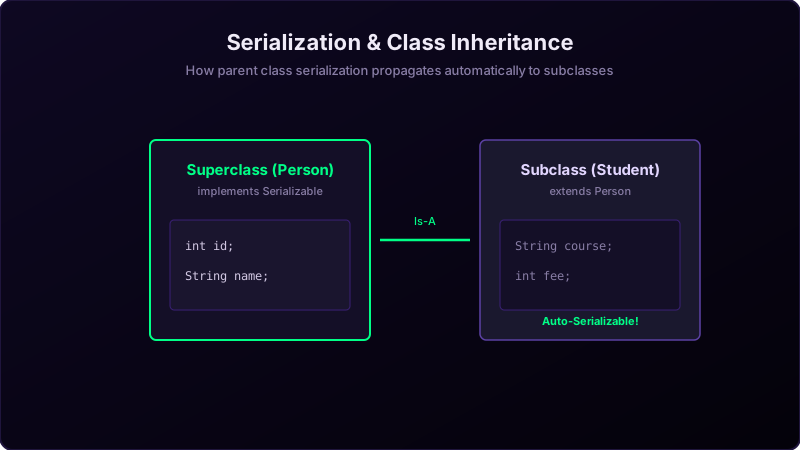
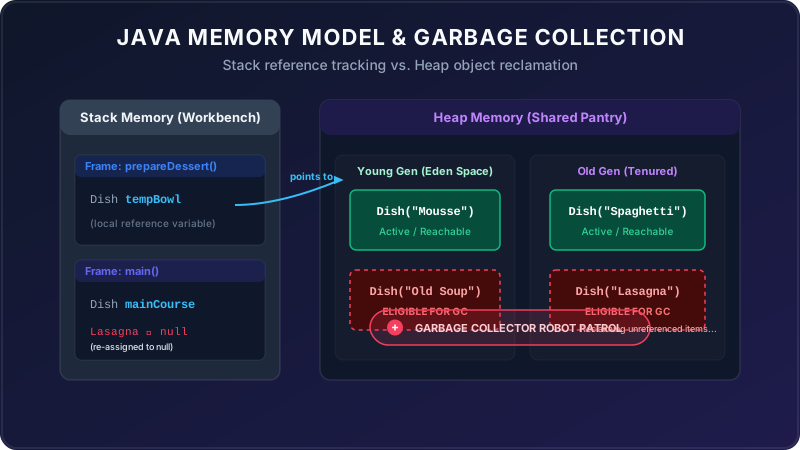
In modern application development, objects exist dynamically inside the JVM's Heap memory. However, to save an object's state to disk, transmit it across network sockets, or cache it in database systems, it must first be converted into a portable format. In Java, Serialization is the built-in mechanism that serializes a live object into a sequence of binary bytes. Conversely, Deserialization is the reverse operation: it reads the binary byte stream and reconstructs an exact, active clone of the object back into memory. While serialization is incredibly convenient, it raises critical safety and optimization concerns. An object may contain highly sensitive fields—such as plain-text passwords, personal credentials, or financial account details—that should never leave JVM memory. To address this, Java provides the transient keyword, which instructs the serialization engine to ignore marked fields completely.
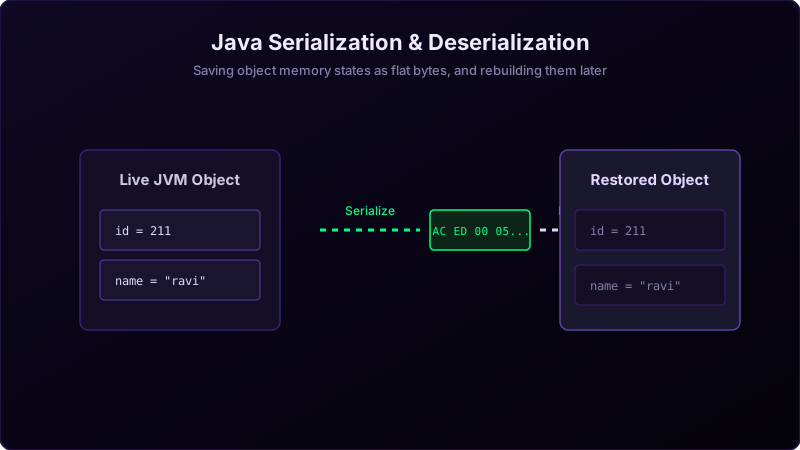
To visualize how serialization and transient fields interact, imagine you built a detailed, 3D custom plastic toy dollhouse (representing your active Java object in Heap memory) and want to mail it to a friend:
- Serialization: You carefully disassemble the dollhouse, fold it flat, pack all the structural pieces into a cardboard mailing envelope, and send it (the byte stream). Your friend receives the envelope and pops the pieces back up to recreate the exact 3D house (deserialization).
- The
transientTag: The dollhouse contains a secret storage drawer holding real gold coins (representing sensitive fields). Before disassembling and shipping the house, you write the wordtransienton the drawer. The packaging machine reads this tag, empties the gold coins, and leaves them behind in your house. When your friend opens the envelope and rebuilds the dollhouse, the secret drawer is there, but it is empty (reset to its default state, such as0ornull).
Scenarios for Using the transient Keyword
The transient modifier is invaluable in three primary scenarios:
- Security Constraints: Protecting sensitive properties like passwords, API keys, or credit card tokens from being written to persistent storage or sent across unencrypted network pipes.
- Non-Serializable Handlers: If your serializable class contains references to active system resources (such as database connections, loggers, or GUI component contexts), they cannot be serialized. You must mark them as
transient; otherwise, the JVM will crash with aNotSerializableException. - Optimization: Skipping calculated fields, temporary cache variables, or large intermediate arrays that can easily be recalculated upon deserialization, reducing network and disk footprint.
Java Implementation Code
Here is a complete Java program showing how a transient field behaves during serialization and deserialization:
package io.practise;

import java.io.*;

public class TransientExample {
    public static void main(String args[]) throws Exception {
        TStudent s1 = new TStudent(211, "ravi");

        // Serialize the Object to a file
        FileOutputStream fout = new FileOutputStream("transient.txt");
        ObjectOutputStream out = new ObjectOutputStream(fout);
        out.writeObject(s1);
        out.flush();
        out.close();
        System.out.println("Object successfully written to disk.");

        // Deserialize the Object from the file
        ObjectInputStream in = new ObjectInputStream(new FileInputStream("transient.txt"));
        TStudent s = (TStudent) in.readObject();

        // Output fields. "id" was transient, so it restores to default integer value (0)
        System.out.println("Restored Student ID (Transient): " + s.id);
        System.out.println("Restored Student Name (Normal): " + s.name);
        in.close();
    }
}

class TStudent implements Serializable {
    // transient field will not be serialized
    transient int id;
    String name;

    public TStudent(int id, String name) {
        this.id = id;
        this.name = name;
    }
}
Conclusion & Best Practices
By marking fields as transient, you take control of your object's serialized representation. Remember that transient fields revert to their Java default values (like 0 for numbers, false for booleans, or null for object references) during deserialization. If your object needs to perform custom calculations or restore these fields upon rebuild, you can implement the private readObject() method to customize the deserialization lifecycle.